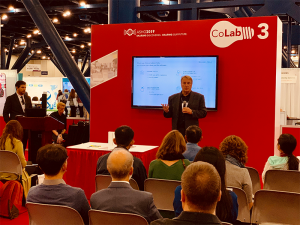
The American Society of Human Genetics (ASHG) Annual Meeting is always an important opportunity to connect with the people advancing human genetics and genomics. This year in Montréal, Canada, those conversations were especially energizing for our team at Golden Helix.
We had an incredible run at our booth, meeting researchers, clinical laboratory professionals, and genomics leaders who were eager to explore how software can help them navigate the growing complexity of genomic data and clinical interpretation. What stood out most was the level of interest in three areas that we believe will play an increasingly important role in the future of genomics: artificial intelligence, enterprise-scale laboratory operations, and automated variant classification.
These weren’t just conversations about new technology. They were conversations about practical challenges, operational efficiency, and how to prepare for the next generation of genomic medicine. Here are three key takeaways from our time at ASHG 2026.
AI is creating new possibilities for genomic interpretation
AI was one of the biggest conversation starters at our booth, and for good reason. The genomics community is actively exploring how artificial intelligence can move beyond experimentation and become a practical part of everyday workflows. At Golden Helix, we see AI as an opportunity to rethink how professionals interact with genomic data, interpret variants, and manage increasingly complex analyses. The real opportunity lies in applying these capabilities where they can make a meaningful difference to the people doing the work.
Our discussions around AI as infrastructure for clinical variant interpretation reflected an important shift in the conversation. Rather than focusing exclusively on what AI might accomplish someday, genomics professionals are asking how it can be integrated into existing workflows, how it can support expert decision-making, and how it can deliver value within the realities of clinical and research environments. We believe successful AI adoption requires more than an impressive algorithm. It requires thoughtful integration, dependable workflows, and technology designed around the needs of the people who use it. The enthusiasm we saw at ASHG reinforced our conviction that AI will be an important part of the next chapter of genomic software, and that its greatest value will come from making complex work more manageable, not simply adding another layer of technology.
Enterprise genomics requires software built to scale
Another major theme at our booth was the need for enterprise capabilities that support the growing scale and complexity of modern laboratory operations. As laboratories expand their sequencing programs and process increasing volumes of genomic data, their software requirements change. They need solutions that can support high-throughput workflows, integrate with existing systems, accommodate different infrastructure requirements, and maintain operational consistency as they grow. At Golden Helix, we understand that scaling a genomics operation involves much more than processing more samples. It means connecting systems, managing data effectively, supporting teams, and creating workflows that can keep pace with changing organizational needs.
Our conversations around Enterprise Genomics highlighted the importance of automation and integration. We also saw strong interest in flexible deployment options, from on-premises infrastructure to cloud environments. Our Bring Your Own Cloud (BYOC) approach and VSWarehouse 3 are part of how we address the need for flexible, scalable genomic data management. The underlying message was clear: laboratories need software that can grow with them. Enterprise readiness should not be an afterthought; it should be a fundamental part of how genomic software is designed. We left these discussions excited about the opportunity to help laboratories build more connected, efficient, and scalable operations.
Autoclassifiers are resonating with teams looking to streamline variant interpretation
Our third major area of interest was Golden Helix’s autoclassifiers. Variant interpretation is a critical component of genomic analysis, but it can also be complex and time-consuming. As laboratories take on more samples and increasingly sophisticated testing workflows, finding ways to improve efficiency and consistency becomes even more important. Our autoclassifiers generated significant interest because they address a practical question: how can laboratories make variant interpretation workflows more efficient while maintaining the rigor these processes demand? By helping automate classification processes, autoclassifiers can reduce repetitive manual work and support more consistent application of classification criteria. This creates opportunities for experts to spend less time on routine tasks and more time on the cases and decisions that require their attention.
What excites us is the role automation can play as part of a broader interpretation workflow. The goal isn’t to replace scientific expertise. It’s to equip experts with tools that help them work more effectively as the volume and complexity of genomic information continue to increase. The response at ASHG reinforced our belief that intelligent automation will be an increasingly important capability for laboratories looking to scale their operations without allowing manual processes to become a bottleneck.
One bigger takeaway: Genomic software must evolve with the science
AI, enterprise scalability, and autoclassifiers may address different challenges, but they share a common theme: the need to make genomic analysis more efficient, scalable, and accessible without losing sight of scientific rigor. The field is advancing rapidly. Sequencing technologies continue to expand what is possible, while laboratories and clinical organizations face growing demands to turn complex data into useful insights. Meeting those demands requires software that brings together intelligent tools, scalable infrastructure, and streamlined workflows.
At Golden Helix, this is central to how we think about the future of genomic software. We want to help organizations do more with their data, support increasingly sophisticated operations, and make complex genomic analyses more manageable. Equally important, we believe progress starts with listening. The conversations we had at ASHG gave us valuable opportunities to hear directly from the community about its priorities, challenges, and expectations. That feedback helps us understand where technology can deliver the greatest value and where we should continue to focus our efforts.
Thank you for an incredible ASHG 2026
ASHG is a reminder of what makes this field so exciting: the combination of scientific ambition, technical innovation, and people committed to solving meaningful problems. At Golden Helix, we’re proud to contribute to that progress by building software that helps genomics professionals turn complex data into actionable insights. The future of genomics will be shaped not only by the data we generate, but by how effectively we analyze, interpret, and manage it. We’re excited to keep building the technology that helps make that future possible. Thank you for a memorable ASHG 2026. We look forward to continuing the conversation.