
Make Every Variant Assessment Go Further
Variant interpretation is one of the most valuable and time-intensive parts of genomic analysis. Each assessment reflects the expertise, evidence, and experience of your laboratory. Any strong interpretation software will provide a means of storing these assessments across cases to leverage the expert knowledge across cases. Assessment Catalogs in VSWarehouse helps with exaclty this to ensure that the knowledge is not lost in individual projects or locked away in disconnected files. Instead, assessments become part of a shared, searchable resource that can support future cases and teams across your organization.
Build on What You Already Know
When the same variant appears again, analysts should not have to start from scratch. With an Assessment Catalog, previously interpreted variants can help guide new analyses, reduce repetitive work, and support more consistent decision-making.
Over time, the catalog becomes an evolving record of your laboratory’s knowledge—one that can grow alongside your testing volume and expand across panels, exomes, genomes, and other applications.
Assessment Catalogs can help laboratories:
- Reuse prior interpretations
- Improve consistency across analysts and cases
- Preserve institutional expertise
- Store frequently seen variants so to remove sequencing artifacts
- Support ongoing review and reassessment
- Create a foundation for scalable variant interpretation
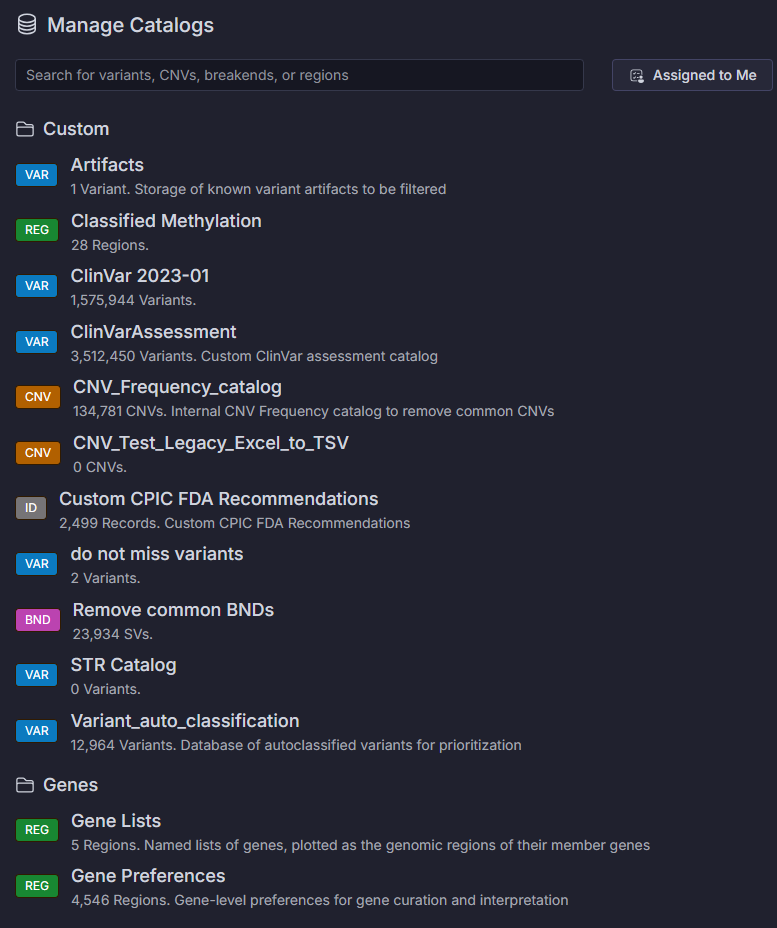
Flexible Access in VSWarehouse
VSWarehouse provides a central environment for managing and reviewing assessment information. Through the graphical interface, teams can access shared assessments, evaluate existing knowledge, audit logs of variant and report outcomes, and maintain the resources that support their interpretation workflows. This makes it easier for laboratories to move beyond isolated case files and establish a coordinated approach to variant knowledge management.
Connect VarSeq with Your Shared Knowledgebase
Assessment Catalogs also fit naturally into workflows built around VarSeq. Using VarSeq’s Run Saved Export capability, laboratories can incorporate the transfer of assessment data into established processes without relying on manual, repetitive data entry.
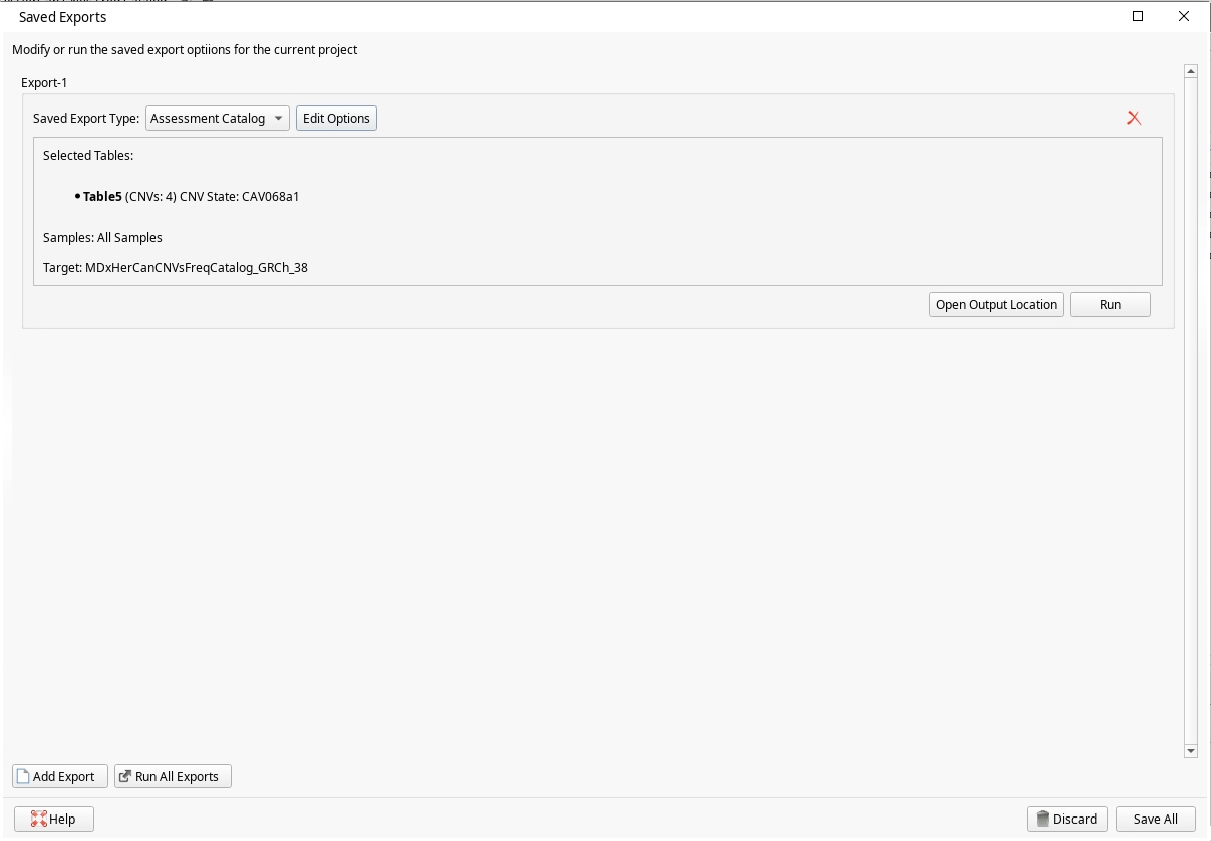
This supports a connected workflow in which assessments created during analysis can contribute to a centralized VSWarehouse resource. An example use case is automatically storing variant/CNV/SV calls across samples and calculate frequencies and variant counts so to effectively filter out sequencing artifacts. The result is a smoother path from individual case interpretation to organization-wide knowledge sharing.
Turn Experience into an Advantage
A laboratory’s greatest interpretation resource is often the knowledge it has already developed. Assessment Catalogs help transform that experience into a reusable, sustainable asset.
With VSWarehouse and VarSeq working together, every assessment has the potential to support the next one and help teams work more efficiently, interpret with greater consistency, and scale their genomic workflows with confidence.
Capture your expertise once. Put it to work across your organization.