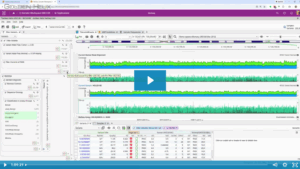
This blog will conclude our VSClinical Best Practice Workflow series and focuses on one of our new reports: VSClinical ACMG Gene Panel Template. This template is valuable because it automatically enters your variant interpretation from the ACMG Guidelines into the report and eliminates the need for manual submission. I would like to explain how to properly implement this report into… Read more »
In the first two parts of this blog, we presented examples of how to leverage Warehouse-stored VSClinical and CNV assessment catalogs in the VarSeq project. Now we are going to explore the Warehouse interface a bit more and show how to query on stored variant data. To access Warehouse from VarSeq, click the V Connect icon located in the top… Read more »
Part 1 of this blog series was focused on new capabilities in Warehouse to store your CNV results. We explored some approaches of how to utilize assessment catalogs of cohort and known pathogenic events. What makes Warehouse so useful in this application is that the catalog is accessed from one central location and ensures every user is leveraging the same… Read more »
We recently hosted a webcast covering the value and application of VSWarehouse through VarSeq. Not only is VSWarehouse a solution for storing your NGS data in a central repository, but it also provides a means to enhance the tertiary analysis done in VarSeq. VSWarehouse will store all your sample/variant data but also stores your catalogs of pathogenic variants, clinical reports, and has the capability of filtering/querying on all your stored data quickly. In addition,… Read more »
This month we hosted two, incredible webcasts officially announcing the latest CNV annotation capabilities our Software Engineering Team has been hard at work on for the past couple of months. Our first webcast, Comprehensive Clinical Workflows for Copy Number Variants in VarSeq, was presented by Golden Helix’s VP of Product & Engineering, Gabe Rudy, who reviewed the expanded capabilities of… Read more »
VarSeq enables breakthrough discoveries in cancer diagnostics by supporting gene panel testing and whole exome and genome analysis. We wanted to share our Cancer Gene Panel tutorial which covers a basic gene panel workflow with an emphasis on adding, modifying and manipulating filter chains. This tutorial will start with creating a new project from an empty project template, importing data, creating… Read more »
The new VSWarehouse Tutorial covers the basic VSWarehouse workflow.This tutorial focuses on connecting to a VSWarehouse instance from VarSeq, adding an existing VSWarehouse project as an annotation source and using reports and assessment catalogs hosted on VSWarehouse. This workflow requires an active VarSeq license with the VSWarehouse feature included. You can go to Discover VarSeq or email [email protected] to request an… Read more »
Yesterday, it was my pleasure to share in a live webcast our integrated solution for genetic data warehousing, VSWarehouse. Although we had a great set of questions at the end of our presentation, we didn’t have time to answer all of them, so here is a selection of the remaining representative questions and my answers. We can provide a hosted version… Read more »
In the world of genomics, data ownership and portability are fundamental principles that every researcher and clinician should embrace. With the increasing complexity of genomic datasets and the critical importance of long-term data accessibility, having the ability to export your data in multiple formats is not just convenient, it’s essential. This is where the gautil export commands shine, providing researchers… Read more »
When a variant shows up as rare in the general “healthy” population, as indicated by low frequency or absence in one or more commonly referenced population catalogs such as GnomAD Exomes or 1000 Genomes, this indicates by proxy that the variant may be pathogenic. However, several factors determine the frequency threshold below which a variant is considered rare enough to… Read more »
Thank you to all our viewers who attended our webcast last week on VarSeq 2.5.0: VSClinical AMP Workflow from the User Perspective. Overall, this webcast highlighted the versatility of VarSeq, demonstrating both a Tumor-Normal somatic workflow and a singleton somatic analysis. In addition, we got to see the utility of our new cancer classifier and the upgrades to our Golden… Read more »
Traditionally genetic tests in cancer have focused on small gene panels that restrict their analysis to a small number of well-studied cancer genes. However, as sequencing costs have decreased, many clinical laboratories have embraced comprehensive genomic profiling tests that rely on whole exome and whole genome next-generation sequencing (NGS) workflows, which can detect millions of high-quality variants for a single… Read more »
Use the force of evaluation scripts to automate and customize your VSClinical ACMG workflow in VarSeq 2.4.0. VarSeq 2.3.0 came packed with new features! Most notably, VarSeq variant analysis expanded to support the import and annotation of structural variant files, and the AMP cancer workflow in VSClinical gained new functionality with the addition of evaluation scripts which help automate and… Read more »
In order to thoroughly assess a variant’s pathogenicity, it is important to take into account the variant’s effect on splicing. While the interpretation of variants that disrupt the pairs of bases at the beginning of a splice site is fairly straightforward, variants resulting in the introduction of a novel splice site are more difficult to interpret. In this blog post,… Read more »
VSClinical is a feature to evaluate clinically relevant variants according to the ACMG or AMP guidelines. This feature can also be used to identify if a variant has been observed previously or evaluate a manually inserted variant. Take, for example, the scenario where a colleague is interested to see if you have seen any variants associated with Bechet syndrome, which… Read more »
Abstract Before assessing the clinical significance of a somatic mutation, one must determine if the mutation is likely to be a driver mutation (i.e. a mutation that provides a selective growth advantage, thereby promoting cancer development). To aid clinicians in this process, VSClinical provides an oncogenicity scoring system, which uses a variety of metrics to classify a given somatic mutation… Read more »
An under-appreciated area of complexity when looking into the field of genetics from the outside can be found in genes and transcripts. Alternative splicing allows eukaryotic species to have a wonderfully powerful genetic code, resulting in multiple protein isoforms being encoded in a single section of DNA. But when it comes to variant interpretation, different transcripts can result in widely different predicted… Read more »
VSClinical users can interpret and report genomic mutations in cancer following the AMP guidelines which we’re demonstrating in this “Following the AMP Guidelines with VSClinical” blog series. Part I introduced the hands-on analysis steps involved in creating a high-quality clinical report for targeted Next-Generation Sequencing (NGS) assays. We reviewed sample and variant quality, including the depth of coverage over the target regions by the sequencing performed for each sample. Now, we are ready to… Read more »
In our last part of this series, we showed how to run a pre-built workflow template via VSPipeline to automatically import and filter sample variants to streamline the search for clinically relevant variants. Now, we can deep-dive into our filtered, pathogenic variants to fully understand and capture their final classification and interpretation. Filtered Germline Variants for ACMG Guidelines The VSPipeline… Read more »
Congenital Myasthenic Syndromes (CMS) History: Congenital Myasthenic Syndromes (CMS) are a group of rare hereditary conditions that can cause seizures, severe muscle weakness, respiratory problems, and potentially disabling weaknesses shortly after birth or early childhood (1). CMS is the result of abnormalities in acetylcholine proteins residing in the motor endplate of the neuromuscular junction (1). These abnormalities can be diagnosed… Read more »